Dynamics of the digital transformation: permeation, making available, and perpetuating in the process of digitalization within the healthcare sector.
FAU Erlangen-Nürnberg
Background
The digital transformation is accompanied by profound changes in the world of work, the complex, partly contradictory, and asynchronous dynamics of which have so far only been partially understood. Conventional categories of technological or societal change reach their limits in this context. The project therefore investigates the interactions and dynamics of digitalisation from both a sociological and sector-specific perspective, without evaluating its effects in a one-sidedly positive or negative manner.
The aim is to develop an in-depth understanding of its three central dynamics – permeating, making available, and stabilising – while taking into account technological, organisational, and work process-related aspects, thus contributing theoretically to the scientific conceptualisation of digital transformation.
Research question
The project addresses the central question of how the digital transformation of working environments (particularly in medicine) can be adequately captured as a complex, multi-layered, and contradictory socio-technical process from a theoretical and conceptual perspective. To this end, the project adopts an integrative approach. It examines how the four fundamental functions of digital technologies – automation, assistance, networking, and virtualisation – manifest and interact within different socio-technical constellations of work.
The aim is to conceptualise digital transformation not as a linear or homogeneous process, but as a socially preconditioned, technologically enabled, and discursively negotiated phenomenon, thereby establishing a robust theoretical foundation for its scientific analysis and empirical investigation.
Approach
The project employs a multi-method design combining qualitative and quantitative approaches to comprehensively capture the complex dynamics of digital transformation at the meso level. Qualitatively, expert and employee interviews are conducted to reconstruct differentiated perspectives on temporal developments and contexts, complemented by participant observations that reveal processual and implicit aspects. These are supplemented by a quantitative organisational survey investigating the use of digital technologies, implementation strategies, and data management in hospitals and outpatient care facilities.
The methodological and data triangulation systematically integrates different types of data collection and sources to represent reciprocal dynamics in a differentiated manner. The objective is to generate theoretically and empirically grounded insights into the digital transformation of work and to embed these in interdisciplinary future scenarios for the healthcare sector.

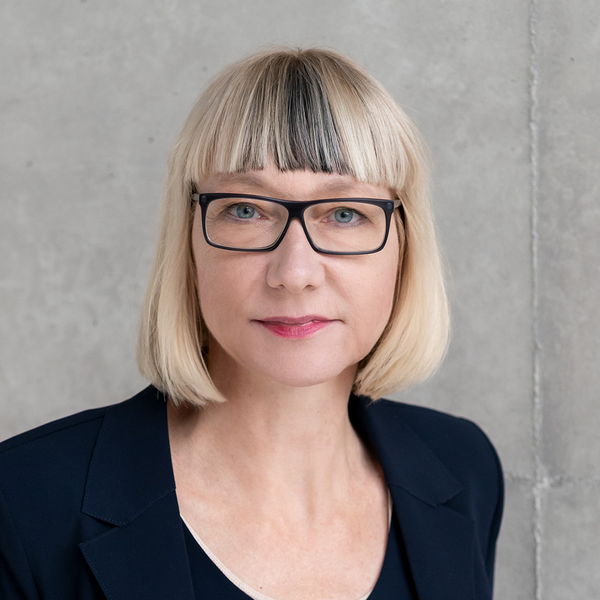
Prof. Dr. Sabine Pfeiffer
FAU Erlangen-Nürnberg
Lehrstuhl für Soziologie (Technik, Arbeit, Gesellschaft)

Stephan Graßmann
FAU Erlangen-Nürnberg
Lehrstuhl für Soziologie (Technik, Arbeit, Gesellschaft)